
What to recycle in your food waste caddy
Introducing food waste recycling
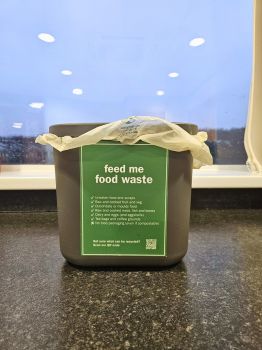
From January, food waste caddies will be available in all student kitchens on campus. This new service will help boost Sussex’s recycling rates by turning leftover food into renewable energy through anaerobic digestion.
Food waste makes up around a third of all waste on campus - so this change will stop tonnes of it going to incineration..
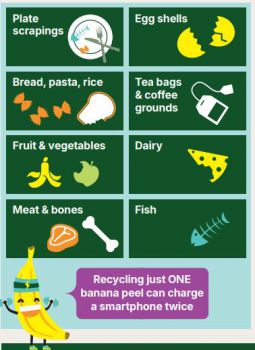
- Recycling just ONE banana peel can charge a smartphone twice.
- Recycling eight banana peels creates enough energy to boil a kettle for your morning brew.
What you can put in your caddy
Please put these items in your food waste caddy (not in general waste):
- All uneaten food and plate scrapings
- Bread, cakes and pastries
- Dairy products, eggs and eggshells
- Fruit and veg (raw or cooked), including peelings
- Out-of-date or mouldy food
- Pet food
- Raw or cooked meat and fish, including bones
- Tea bags and coffee grounds
No compostable packaging or containers - these often contain plastics and contaminate the food waste.
How it works
- Each kitchen gets a food waste caddy and two compostable bags per week.
- When it’s full, tie the bag and take it to your bin compound. Put it in the bin labelled “food waste”. If you’re unsure where this is, ask your reception.
- Wash your caddy, add a new liner, and you’re good to go.
- Extra compostable liners are available at accommodation receptions.
Please don’t:
- Put anything other than food waste into the food waste bins - it contaminates the whole bin.
- Leave food waste bags on the floor of the compound - this attracts seagulls and rodents.
Where does the food waste go?
All collected food waste is processed through anaerobic digestion, which creates green energy and a nutrient-rich fertiliser (digestate).
How often should I empty my caddy?
You must empty and clean your caddy at least once a week for hygiene reasons.
If you don’t empty it, it can cause odours and attract flies. Cleaning staff will monitor this and may report unemptied caddies. If they have to intervene, a service charge may be applied.
Dealing with flies
To avoid flies:
- Keep the lid closed
- Empty and clean your caddy weekly
Need help with recycling?
Check the Recycling A–Z for more details on what you can recycle on campus.